
Benchmarking lab Coval put Dialog-RSN-1 to the test. It posted the lowest median response latency and 97% workflow adherence under real-world call conditions.
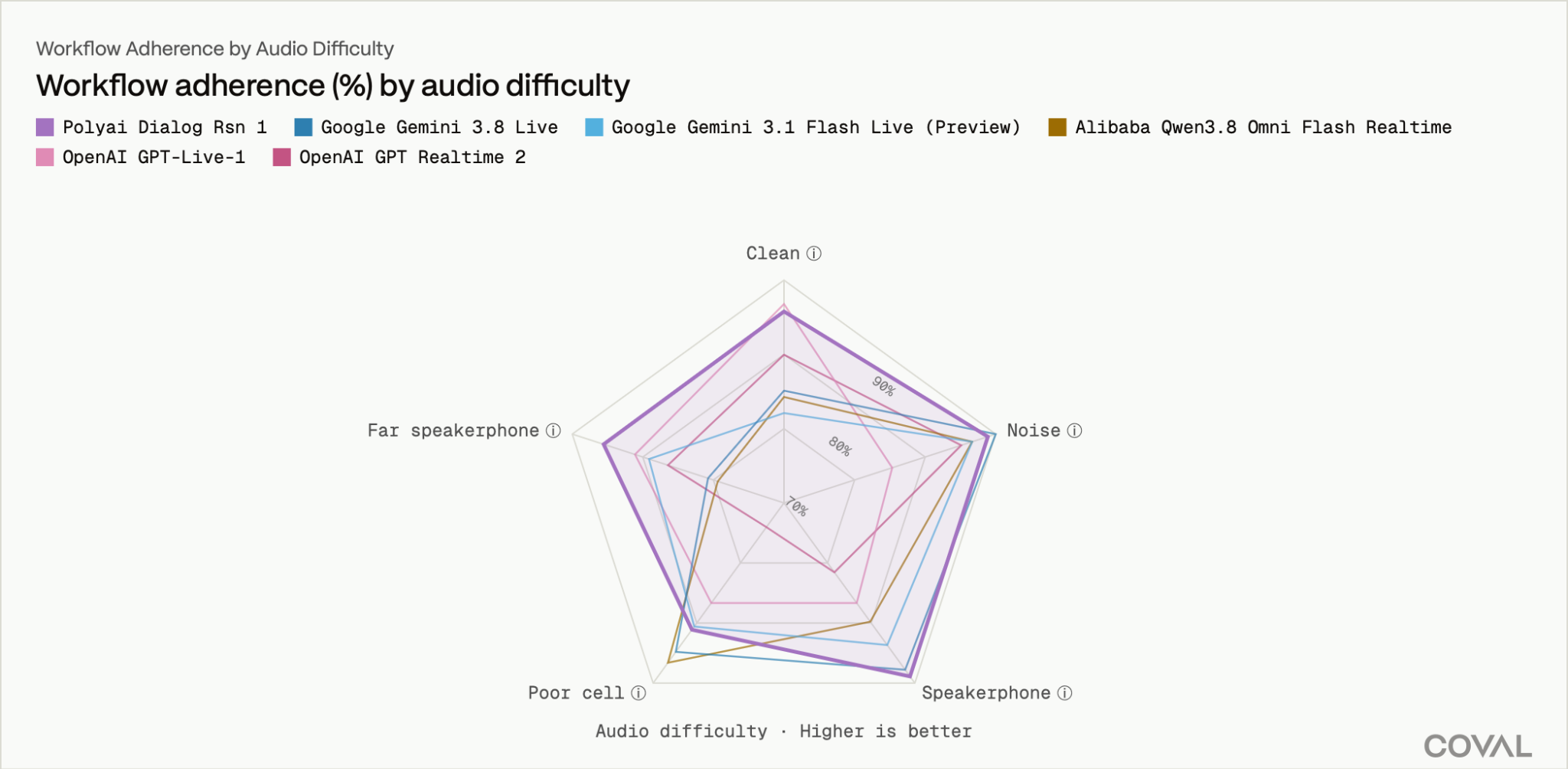
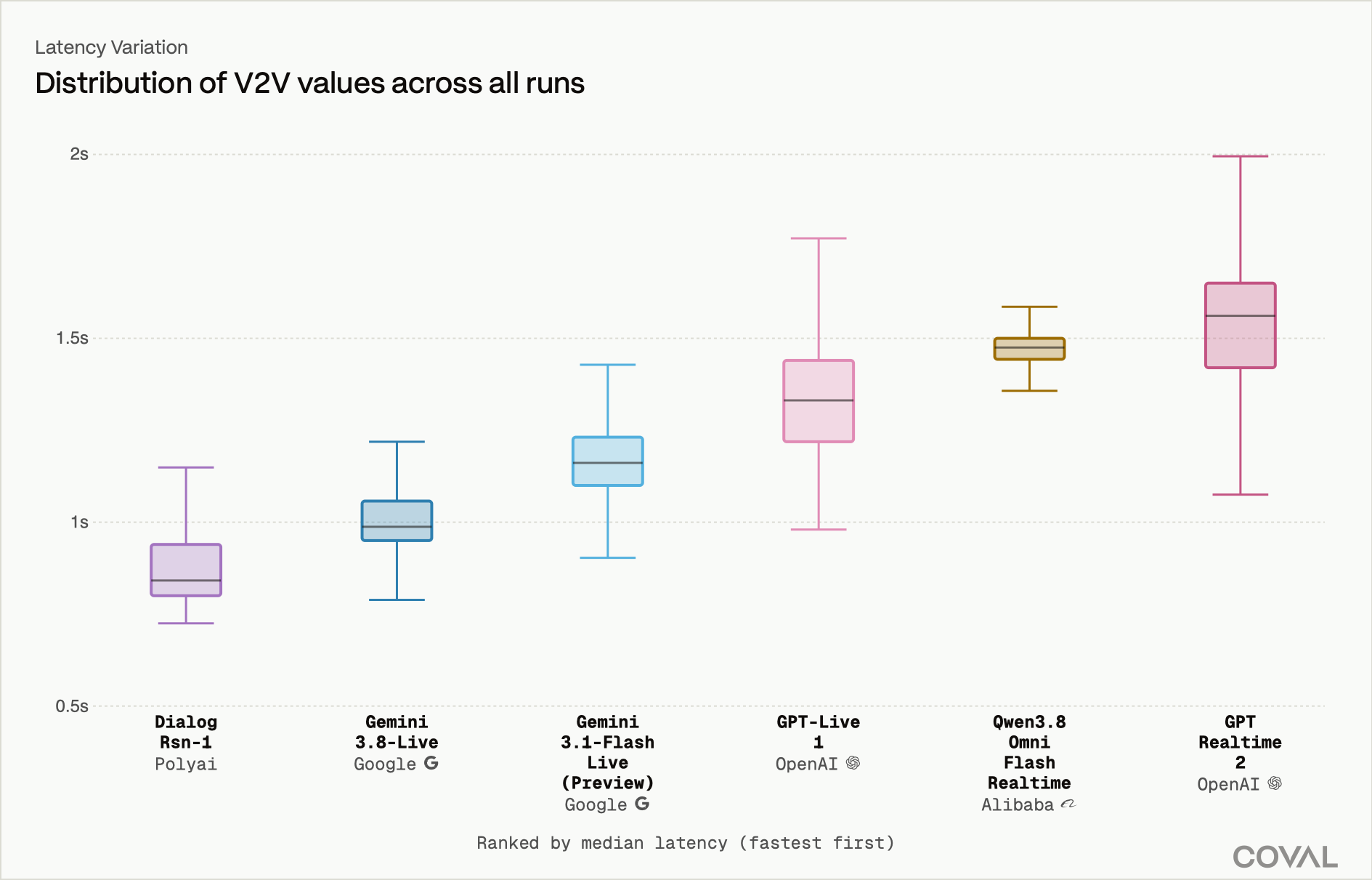
Coval, an independent voice AI testing lab, ran PolyAI's Dialog-RSN-1 through five call conditions built around real-world scenarios: a clean line, a line with background noise, a speakerphone, a far-field speakerphone, and a poor cell connection. The results were striking: Dialog-RSN-1 posted 97% workflow adherence overall, with the lowest median voice-to-voice latency of the six models Coval tested.
This matters because real calls are subject to all of the messy, unscripted factors that technology and people present. Audio can come in and out while callers interrupt, trail off, and change their minds mid-sentence. And callers just want their bookings made, their accounts looked up, or their transfers handled: static and dropped syllables included.
That's a high bar for success, and we're proud to report that Dialog-RSN-1 outperforms the competition across all kinds of real-world scenarios.
How did Dialog-RSN-1 perform?
Coval ran continuous, simulated-caller conversations against Dialog-RSN-1 and compared the results with five other dialog agents under the same audio conditions.
Each simulated call was scored on two things: whether the agent followed the conversational flow it was supposed to, and how quickly it responded.
Dialog-RSN-1 scored 97% on workflow adherence overall, the measure of how closely the agent followed its expected call flow. Here are the results by condition:
- Clean line: 98%
- Background noise: 99%
- Speakerphone: 99%
- Far-field speakerphone: 96%
- Poor cell connection: 91%
Coval also measured response speed: Dialog-RSN-1 had the lowest median voice-to-voice latency of the six models, at about 0.9 seconds across conditions.
"Real deployments must work in real audio environments. That's why we built this benchmark to test on lines with poor audio quality to demonstrate resilience in the messy real world. Dialog-RSN-1 is the only model we tested that kept its workflow adherence above 90% even on a poor connection, and that's the number that actually predicts how an agent performs once it's live."
Founder & CEO, Coval
What's behind the results?
Coval scored every call two ways: whether the agent followed the conversation it was supposed to have, and how quickly it replied. Both scores came from live, simulated calls (rather than a transcript), so the test captured what a caller actually experiences in the moment, interruptions and all.
Dialog-RSN-1 is built to handle an entire call in one system, rather than stitching together separate tools for listening, understanding, and replying. That means fewer places for a noisy line or a missed word to cause a mistake. In production, it responds in well under a second on average. In PolyAI's own live customer calls, Dialog-RSN-1 has already delivered outcomes including an 11% lift in containment and a 37% cut in response latency.
Coval's benchmark is the first time an outside lab has checked that performance for itself.
What do they mean for teams evaluating a dialog agent?
Most benchmark numbers come from a clean phone line, because that's the easiest test to pass. The harder, more useful question is what happens when the line isn't clean. That's the kind of call a real deployment has to handle with real callers.
Four questions worth asking any dialog agent partner:
- How well does it perform on a bad connection, not just a clean one?
- Who ran the test, you or an independent lab?
- Does the speed number include the time the model takes to think, or just network delay?
- Can I see this test run again on your current model, not an older one?
Get started with Dialog-RSN-1
Dialog-RSN-1 is available now. Learn more here.
Full methodology and ongoing results are maintained by Coval at benchmarks.coval.ai/s2s.